Online Anxiety Therapy for Adults in the St. Petersburg Area
Welcome
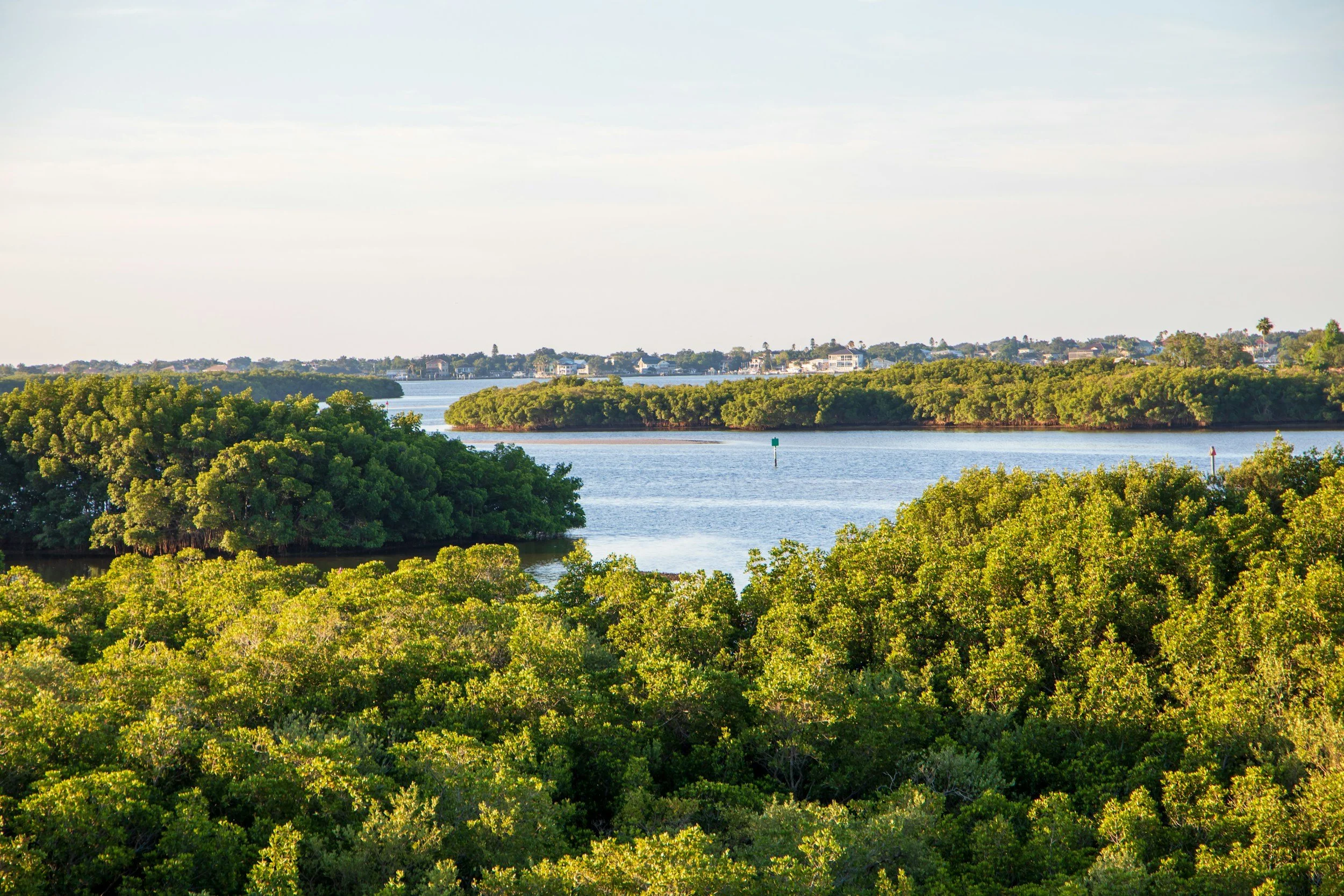
Tampa Bay has grown into one of the fastest expanding regions in the state, and growth here comes with bridge commutes, rebuilding after storms, and a service economy asking a lot of the people running the region. I offer telehealth anxiety therapy across the region, working with adults from St. Petersburg to Tampa and Sarasota through secure video sessions. More on the Florida service area lives on the Florida locations page. I hold a Florida license, TPMC #1034, and provide therapy online only to adults across the whole state, including the St. Petersburg area.
You will receive a response in two business days.
Telehealth Anxiety Therapy for St. Petersburg Area Adults
Where you sit around the bay makes no difference to the format: a session runs 50 minutes over secure video, start to finish. No crossing the Howard Frankland or the Gandy during rush hour, no juggling a lunch-break appointment against a bridge backup, no waiting room. Telehealth removes the bridge commute retail, healthcare, and hospitality shifts across the service economy here rarely leave room for. A randomized controlled trial comparison, part of a broader systematic review of telehealth therapy for anxiety, found the format holds up against in-person care[1]. St. Petersburg, a daily commute into Tampa, or a home office in Sarasota, the appointment stays put: your screen, not a bridge, gets you there.
What Brings St. Petersburg Area Adults to Therapy
Tampa Bay's growth shows up everywhere at once: new construction, rising rent, and a commute stretching longer each year as more people move into the region faster than roads expand to match. Bridge commutes between St. Petersburg, Tampa, and the surrounding cities eat a real chunk of the day, and time spent stuck in traffic rarely counts as rest. An estimated 31.1% of adults face an anxiety disorder at some point in life, according to statistics from NIMH, and a region growing this fast layers its own weight onto the baseline[2]. Pinellas, Sarasota, and Hillsborough counties each carry their own separate circuit-based Mental Health HPSA designation rather than sharing one across the bay area, and Pinellas County's low-income designation alone covers 423,192 people, a shortage I hear about often from bay area clients who waited weeks for an in-person opening before trying telehealth, according to HRSA's HPSA Dashboard[3].
A pattern I notice with clients here after a major storm season: the immediate crisis passes, insurance calls get made, repairs get scheduled, and weeks later the exhaustion finally catches up, often mistaken for laziness rather than recognized as recovery fatigue.
Typical anxiety advice assumes a stable routine to return to after a hard stretch.
Service economy workers, healthcare staff, and hospitality employees across the bay area rarely get one, since storm cleanup, seasonal tourism demand, and short-staffed shifts stack on top of each other, leaving little room for a clean recovery period before the next demand arrives.
Sarasota and the barrier islands add their own pressure: a retiree and second-home population living alongside year-round residents working service jobs, creating a cost of living gap many working adults feel keenly every month. This delayed exhaustion after a hard stretch has a name too, and my post on emotional whiplash explains why the crash tends to land well after the crisis itself has passed.
A Different Way to Work With Anxiety
Here is a composite picture, not a specific client: someone commuting daily across the bay for a healthcare job, managing patients all shift, then facing a bridge backup on the way home, arriving late to family dinner wound tight and short-tempered. The bridge did not cause the anxiety. The bridge became the place anxiety finally had room to surface.
I think about the nervous system less as something to fix and more as something to get to know, especially after a stretch of storm recovery or a season of back-to-back demands. Training in the Safe and Sound Protocol™ and HeartMath shaped how I understand a body stuck in recovery mode long after the crisis technically ends. Befriending your nervous system starts with recognizing delayed exhaustion as a real signal, not a personal failing.
For grounded, doable steps between sessions, practical tools for daily calm offers a starting place worth trying.
Working together often starts with naming where anxiety comes from, moves into nervous system regulation suited to a body running on delayed recovery, layers in cognitive tools for the guilt around needing rest after a storm has passed, and builds toward habits sustainable on a long commute and a demanding shift schedule.
Cities I Serve in the St. Petersburg Area
I work with adults across the St. Petersburg area, including Gulfport, Largo, Madeira Beach, Pinellas Park, Sarasota, Seminole, South Pasadena, Tampa, Tierra Verde, and Treasure Island. Every city connects through the same telehealth setup, so your location narrows down to one requirement: sitting physically inside Florida during your session.
Practical Details
Insurance billing runs through Alma and Headway, with in-network coverage including Aetna, Cigna, Anthem, and United Healthcare, along with several other plans; coverage gets confirmed before your first session, and superbills are available if your plan sits out of network.
A free 15-minute consultation comes first, a short conversation to talk through what brings you to therapy and whether working together fits.
I offer online therapy in Idaho, Utah, Colorado, Connecticut, Delaware, South Carolina, and Florida.
Schedule a free consultation to get started, low pressure, no obligation.

Meet The Therapist
I am Taylor Garff, LCPC, LPC, CMHC, a licensed therapist offering online anxiety therapy for adults throughout Florida. My work combines evidence-based approaches with nervous-system awareness so therapy feels practical and supportive.
I specialize in helping high-functioning adults who appear calm on the outside but feel overwhelmed on the inside. Therapy gives you a place to slow down and reconnect with your body’s natural rhythm.
FAQ
What does online anxiety therapy in the St. Petersburg area address?
Storm recovery fatigue, bridge-commute time loss, and a service schedule with no slack each leave a different fingerprint on the nervous system. The first sessions map which pattern is yours; from there the work turns toward regulation skills fitting a bay-area routine, not an idealized one.
I feel exhausted weeks after hurricane season ends. Is this normal?
Delayed exhaustion after a storm season is common, and the exhaustion tends to surface once the immediate crisis tasks are handled. Repairs, insurance calls, and rescheduling take real energy, and the fatigue often lands after the pressure lifts rather than during the crisis. Talking through the pattern helps separate recovery fatigue from a deeper anxiety concern.
Do I need to live in St. Petersburg to work with you?
No. Florida residency rules for telehealth ask for one detail: being physically present in the state during each session, whether from a home office in Tampa or a condo near the Pinellas beaches. A private, quiet space and stable internet connection cover the rest of what a session needs.
What does online anxiety therapy cost in the St. Petersburg area?
Your plan and network status set the price tag. Insurance billing runs through Alma and Headway, with in-network coverage including Aetna, Cigna, Anthem, and United Healthcare, along with several other plans; coverage gets confirmed before your first session. Superbills cover reimbursement for plans sitting outside those networks, a helpful option for bay area households juggling storm-season repair bills alongside session costs. Bring your specific plan to the free consultation for a clear answer.
How do I get started with online anxiety therapy in the bay area?
A short, free 15-minute consultation starts things off, covering what brings you to therapy and whether the fit feels right around a bridge commute or a shift schedule. No pressure, no commitment required. Schedule directly through the anxiety therapy page.
What is the reputation of Polyvagal Theory in the scientific community?
Among practicing clinicians, polyvagal theory holds a strong reputation as a clinical framework, widely taught in trauma-informed and nervous system-focused training programs, including HeartMath and Safe and Sound Protocol certifications I hold myself. Clinicians tend to value the theory less as a settled biological fact and more as a working language for talking with clients about states of calm, alertness, and shutdown, states every clinician sees in session regardless of the exact mechanism underneath. My own use of polyvagal-informed language in session comes from this clinical value, helping clients name what a body experiences without waiting on unanimous agreement inside neuroscience research circles.


Sources
Journal of Telemedicine and Telecare. Evidence-based telehealth interventions. https://doi.org/10.1177/1357633X231224491
National Institute of Mental Health. Any Anxiety Disorder. https://www.nimh.nih.gov/health/statistics/any-anxiety-disorder
Health Resources and Services Administration (HRSA). Mental Health Care Health Professional Shortage Area Find, Pinellas County, Florida, data as of 07/21/2026. https://data.hrsa.gov/tools/shortage-area/hpsa-find

Regulating Your Nervous System with SSP
At Inner Heart Therapy, I offer the Safe and Sound Protocol (SSP)—a research-backed therapy that helps regulate your nervous system. If you’re struggling with anxiety, trauma, or sensory overload, SSP can support your body’s natural ability to feel safe, calm, and connected.
Want to learn more? Explore how SSP for Anxiety: How Safe Sound Therapy Helps Your Brain Relax and SSP vs. Traditional Therapy: Why Your Nervous System Needs More Than Talk can deepen your healing journey.
Stay Connected, No Therapy Required
Not ready to dive into sessions? You can still get small doses of calm.
I share quick tools, reflections, and real-world ways to ease anxiety, straight to your inbox.

Last reviewed by Taylor Garff, LPC, LCPC, CMHC on 10/2025