Streaming With Anxiety: A Therapist’s Guide To Staying Online Without Burning Out
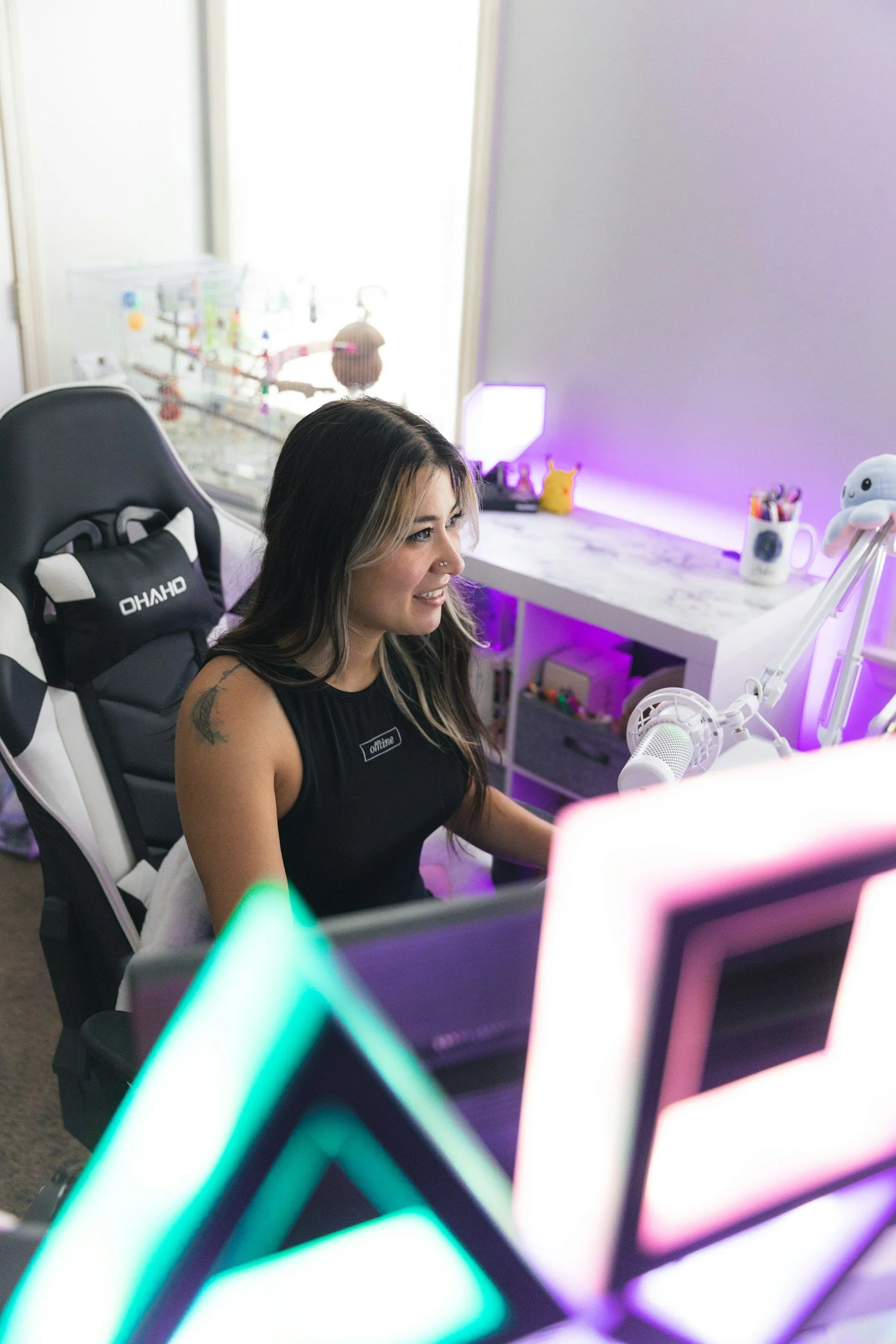
Streaming looks simple from the outside. You hit “Go Live,” talk, play, react, and try to keep people engaged. Your nervous system sees something different. It sees exposure, uncertainty, and performance pressure. That combination hits anxiety hard.
This guide helps you understand why streaming feels intense and how to support your body so you can stay online without burning yourself out.
Why streaming activates anxiety
Your brain scans for risk. Streaming gives it plenty to work with. You never know who will show up, how chat will behave, or what your numbers will do. Your system reacts before you have time to think.
You might notice:
Fast breathing
Tight shoulders
Trouble focusing
Worry about how you sound or look
Fear of losing viewers
This is not weakness. It is biology. Your nervous system treats unpredictability as a threat, even when nothing is actually dangerous.
Why anxiety lingers after you end the stream
Your body needs time to settle after high stress. When you end your stream, your nervous system is still processing what happened.
Post-stream tension often shows up as:
Replaying awkward moments
Fixating on dips in viewer count
Worrying about chat reactions
Feeling wired instead of relaxed
Trouble falling asleep
Without recovery time, each stream stacks on the last.
How to support yourself while you stream
Your body reacts to streaming before your mind does. A few intentional breaths shift your system out of high alert and into a steadier state.
Inhale through your nose for four. Exhale through your mouth for six. Repeat three times.
The longer exhale matters because it signals that things are safe enough to slow down. Many streamers notice their voice steadies and their shoulders drop within seconds. This simple reset helps you start your stream with more presence instead of tension.
Settle your breath before you go live
When anxiety rises, your eyes narrow and your body shifts into a scanning mode. This tight, focused stare tells your system there might be something to defend against. Widening your gaze interrupts that pattern. Let your eyes take in more of the room, not only the chat window or your camera preview. This broader visual field sends a cue of safety and helps your muscles relax. Your attention becomes more flexible, and your reactions feel less sharp.
Use a softer gaze
When you feel anxious, your eyes narrow and your body tenses. Let your gaze widen a little so you see more of the room. This signals safety to your nervous system.
Create a pause phrase
Streamers feel pressure to respond quickly, so they push through stress spikes without realizing it. A simple pause phrase gives your system a moment to settle without breaking the flow of the stream.
“I’ll take a second.”
“One moment.”
“I need a sip of water.”
These phrases buy you a few breaths and reset your pace. They also normalize rest for your community. When you use them consistently, your body learns that it does not have to power through every uncomfortable moment.
End your stream with a decompression window
Your nervous system stays active long after you hit “End Stream,” especially if the session was intense. Give yourself one minute before opening analytics or Discord. Let your breath slow. Roll your shoulders. Stretch your hands. Drink water.
These small steps tell your system that the performance part of your day is over. Without them, leftover adrenaline can turn into replaying moments, worrying about numbers, or feeling wired at night. A short decompression window protects your energy for tomorrow’s stream and your life outside content creation.
When streaming anxiety needs more support
If anxiety shapes your schedule, mood, or sleep, you deserve support that matches how your system works.
If you want deeper support and you live in Idaho, Colorado, Utah, Connecticut, Florida, Delaware, or South Carolina, I offer online anxiety therapy. You get a place to talk through pressure, identity, and burnout without judgment.
About the Author
Taylor Garff, M.Coun, LCPC, CMHC, LPC, is a licensed therapist with over 10 years of experience helping adults manage anxiety, overwhelm, and identity challenges. He is certified in HeartMath, Safe and Sound Protocol (SSP), and breathwork facilitation. Taylor is the founder of Inner Heart Therapy, where he provides online therapy across multiple states.
