Online Anxiety Therapy for Adults in the Colorado Springs Area
Welcome
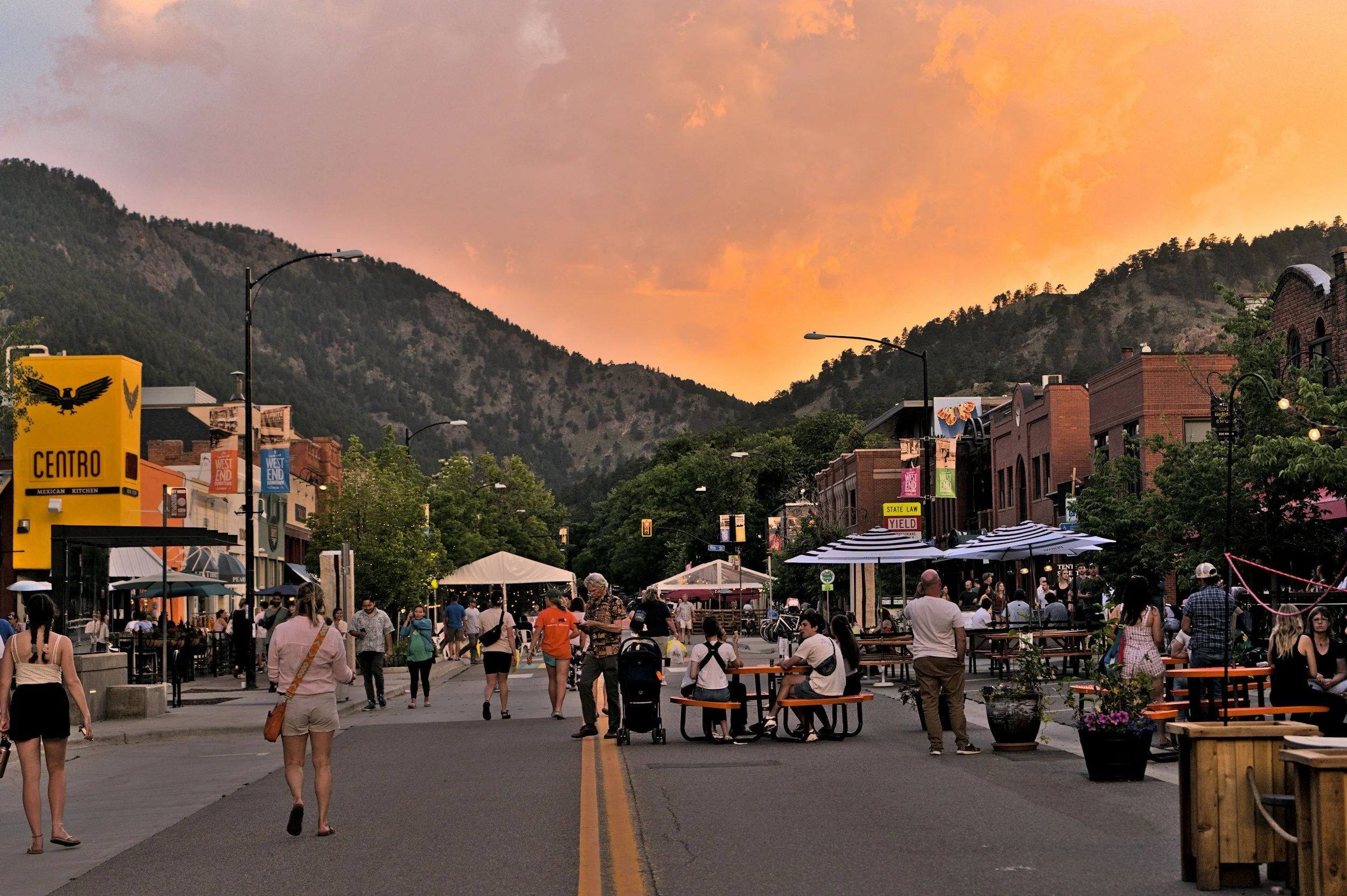
Boulder projects calm: yoga studios on every corner, hiking trails minutes from downtown, a culture built around talking openly about wellness. Underneath the smoothies and sunrise workouts, plenty of CU students, startup founders, and lab researchers carry anxiety they assume nobody else around them feels. Nobody says this out loud at a trailhead meetup. Online therapy reaches Boulder, Longmont, Louisville, Nederland, and Superior the same way, wherever a laptop and a private room exist. My Colorado license, LPC #0018672, covers telehealth work with adults anywhere in the state, Boulder County included.
You will receive a response in two business days.
Telehealth Anxiety Therapy for Boulder Area Adults
Video sessions run fifty minutes, built around lab hours, startup sprints, and CU semester deadlines. No trip down Highway 36 or across town from Nederland, no waiting room chair between a climbing gym visit and a lab shift. A 2023 systematic review found telehealth therapy holds up as well as in-person care for anxiety, useful news when a lab schedule leaves no room for a commute[1]. A free fifteen-minute consultation covers scheduling for calendars running late into the night during finals week or a product launch.
What Brings Boulder Area Adults to Therapy
One pattern keeps surfacing with clients around Boulder: the more regulated a town looks on the surface, meditation apps, cold plunges, a hiking group for every interest, the more isolated an anxious person often feels inside the picture. Wellness culture sets a bar for calm. Little room stays for admitting a racing mind, so people quietly assume they are the only ones struggling underneath a shared appearance of ease. NIMH figures put the year-over-year number at 19.1% of U.S. adults, a rate holding steady no matter how calm a town looks[2]. The assumption behind struggling alone, believing the struggle is uniquely yours, shows up often enough with clients here to count as its own pattern, and my post on anxiety showing up in different, easy-to-miss patterns walks through a few of the more common ones.
Standard advice like slow down or set boundaries assumes a workplace culture with defined hours.
Startup founders and CU researchers chasing grant deadlines or funding rounds operate inside cultures built to reward constant output, where slowing down reads as falling behind.
A wellness routine borrowed from a podcast breaks fast against a lab schedule or a fundraising sprint with no fixed end time.
Nederland and the smaller mountain towns around Boulder County carry a separate access problem.
Federal shortage-area data shows large stretches of mountain and rural Colorado formally designated as short on mental health providers, and telehealth closes the gap without asking anyone to drive down Highway 36 for an appointment[3].
Boulder County carries 2 designated federal Mental Health Professional Shortage Areas today, based on HRSA data I reviewed, a low-income catchment area covering 79,260 people and a separate FQHC-based designation covering 132,183 people, hard numbers behind the mountain-town access gap already described above[4].
A Different Way to Work With Anxiety
A CU graduate student, active in a climbing group, attends every wellness event on campus, and still spends most nights awake, comparing an internal panic to the calm every classmate seems to project, a composite picture, not a specific client, built from patterns across many sessions. The outside picture reads regulated. The inside experience reads like static, never fully quiet.
I approach the nervous system as a partner to understand, not a problem to correct. When a system stays on alert inside a culture prizing calm as a personality trait, pushing harder toward relaxation backfires. Real change starts with recognizing what the alarm signals mean, then building a felt sense of safety the body trusts, one small signal at a time.
For anyone stuck comparing an anxious inside to a regulated-looking outside, this piece on what feeling safe in your own body requires breaks the idea down further.
The work usually opens with naming where the anxiety comes from, folds in nervous system regulation through HeartMath and Safe and Sound Protocol™ tools, brings in cognitive work for perfectionist thought patterns, and builds habits sized to a real semester or sprint schedule, not a wellness-influencer ideal.
Cities I Serve in the Boulder Area
Sessions cover Boulder, Longmont, Louisville, Nederland, and Superior. Wherever the commute starts inside Boulder County, sessions happen over secure video, no trip downtown required.
For coverage across the rest of Colorado, the Colorado locations page lists every regional hub.
Practical Details
Alma, Tava, and Headway handle insurance billing, with in-network coverage through: Anthem Blue Cross Blue Shield of Colorado, ClaimDOC, Optum, Oscar, Harvard Pilgrim, Oxford, UHC Student Resources, UMR, All Savers, Health Plans Inc, Surest, UnitedHealthcare, UnitedHealthcare Shared Services, UnitedHealthcare Global, Aetna, Meritain, Nippon, Allied Health Systems, and Cigna.
Private pay is available for anyone outside those networks.
The process starts with a free fifteen-minute consultation, low pressure, a chance to ask questions and decide together whether the fit feels right.
I offer online therapy in Idaho, Utah, Colorado, Connecticut, Delaware, South Carolina, and Florida.
Schedule a free consultation, low pressure, no obligation.
FAQ
What does online anxiety therapy in the Boulder area look like?
Sessions happen over secure video, scheduled around lab hours, startup sprints, and CU class blocks. Fifty minutes, one on one, from a dorm room, an apartment near Pearl Street, or an office in a startup building. No trip across Boulder County needed to attend.
Do you work with CU students and startup employees?
Many Boulder-area clients balance a full course load, a research position, or a startup role with long, irregular hours, and sessions fit around semester deadlines and sprint schedules. Working inside a wellness-focused town does not erase the private pressure these roles carry.
Is online therapy effective for anxiety?
Research on telehealth generally shows video-based therapy works as well as in-person sessions for most anxiety concerns. The fit between client and therapist matters more than the format of a session. A free consultation offers a low-pressure way to test the fit before committing further.
How soon should someone start therapy for anxiety?
A diagnosis or a breaking point is not a requirement to begin. Many Boulder-area clients start during a stretch of quiet overwhelm, when the gap between an outward wellness routine and an inward racing mind grows too wide to keep managing alone.
How does scheduling work around a busy CU or startup schedule?
Scheduling starts with a free fifteen-minute consultation, where session timing gets worked out around a lab hour, startup sprint, or semester deadline. Sessions run fifty minutes over secure video, from a dorm room, an apartment, or an office, with no drive across Boulder County required.
Has anyone used polyvagal therapy in their approach, or does the method remain too new to have a track record?
Polyvagal theory has guided nervous system work for over two decades, and clinicians across the country, myself included, use the framework alongside tools like HeartMath and the Safe and Sound Protocol to help the body register safety instead of staying braced for the next stressor. Boulder clients tend to arrive already familiar with the language of nervous system regulation, so sessions often move faster into applying polyvagal-informed techniques rather than explaining the theory from scratch. A track record now exists behind the approach, even though each person's nervous system settles on a different timeline.

Meet The Therapist
I am Taylor Garff, LCPC, LPC, CMHC, a licensed therapist offering online anxiety therapy for adults throughout Colorado. My work combines evidence-based approaches with nervous-system awareness so therapy feels practical and supportive.
I specialize in helping high-functioning adults who appear calm on the outside but feel overwhelmed on the inside. Therapy gives you a place to slow down and reconnect with your body’s natural rhythm.


Stay Connected, No Therapy Required
Not ready to dive into sessions? You can still get small doses of calm.
I share quick tools, reflections, and real-world ways to ease anxiety, straight to your inbox.
Sources
Journal of Telemedicine and Telecare. Evidence-based telehealth interventions. https://doi.org/10.1177/1357633X231224491
National Institute of Mental Health. Any Anxiety Disorder. https://www.nimh.nih.gov/health/statistics/any-anxiety-disorder
KFF State Health Facts. Mental Health Care Health Professional Shortage Areas. https://www.kff.org/other-health/state-indicator/mental-health-care-health-professional-shortage-areas-hpsas/
Health Resources and Services Administration (HRSA). Mental Health Care Health Professional Shortage Area Find, Boulder County, Colorado, data as of 07/21/2026. https://data.hrsa.gov/tools/shortage-area/hpsa-find



Last reviewed by Taylor Garff, LPC, LCPC, CMHC on 10/2025