Bisexual Anxiety: Understanding Erasure, Doubt, and the Pressure to Prove Your Identity
You've explained your identity more times than you should have to. You've been told you're "going through a phase," "confused," or "greedy." You've sat in rooms where people who share your orientation aren't visible, and wondered whether you belong in any community at all.
Bisexual anxiety carries unique stressors that monosexual identities (straight or gay) don't share. The erasure, the pressure to "pick a side," and the identity questioning coming from inside and outside the LGBTQ+ community create a specific nervous system burden research consistently documents.
Here's what the pattern looks like, why the nervous system responds this way, and what helps.
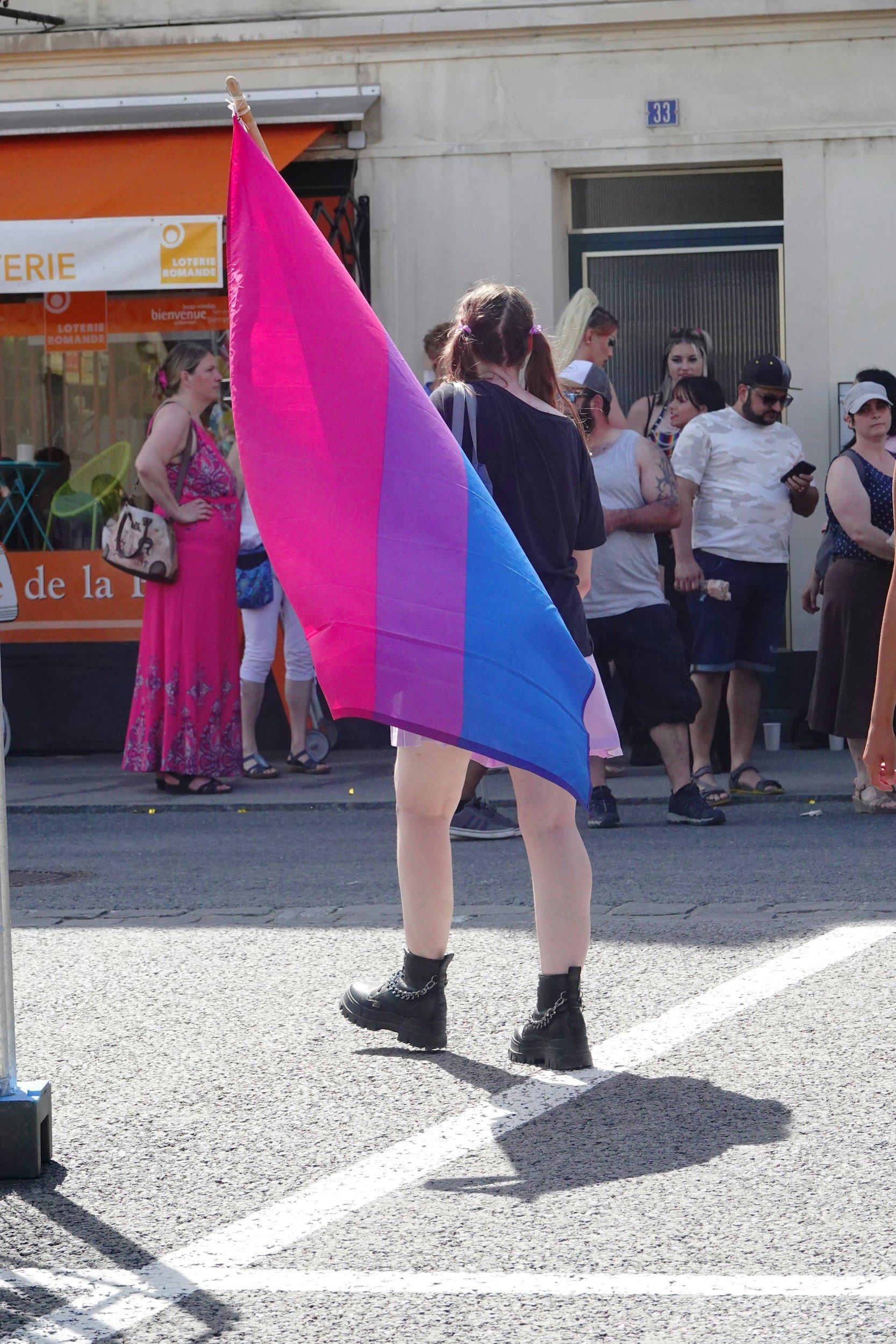
What Makes Bisexual Anxiety Different
Bisexual people face minority stress in a specific configuration:
Erasure from both directions
Straight communities assume you're straight when you're in an opposite-sex relationship. LGBTQ+ communities question your belonging when you're in an opposite-sex relationship. Same-sex relationships receive the standard homophobia and biphobia layered on top. There's no relational configuration where the identity is fully visible and fully accepted without effort.
Identity invalidation as a constant
Bisexual people hear "that's not real" more than almost any other identity group within the LGBTQ+ spectrum. The invalidation comes from family, friends, dating partners, coworkers, and media representation. When your identity is questioned repeatedly, the nervous system starts to treat the identity itself as something requiring defense.
Internal doubt amplified by external messaging
When the culture tells you your identity doesn't exist, the internal version follows: "What if they're right? What if I'm confused? What if I'm performing something that isn't real?" This internal questioning isn't organic. The doubt is the internalized version of the external erasure. But the body experiences the doubt as if the question is genuinely unresolved.
Hypervigilance about perception
Bisexual people frequently monitor how they're perceived: "Do they think I'm straight? Do they think I'm gay? Do they know I'm bi? Will they treat me differently if they find out?" This constant social monitoring activates the threat detection system and keeps the nervous system in a low-grade activated state.
What the Research Shows
Bisexual people report higher rates of anxiety, depression, and suicidal ideation than both heterosexual and gay/lesbian populations. This isn't about the orientation. The health disparity is about the unique stress load:
Less social support (not fully belonging in straight or LGBTQ+ spaces)
Higher rates of identity concealment (hiding from different groups depending on the context)
More frequent microaggressions (casual erasure, "jokes," dismissive comments)
Fewer visible role models and affirming representations
The nervous system carries the cumulative weight of these experiences. Chronic invalidation trains the body to stay vigilant, and vigilance sustained over years produces the anxiety symptoms researchers measure.
The Nervous System Perspective
Through a polyvagal lens, bisexual anxiety makes sense:
Your nervous system reads belonging as safety. When belonging is conditional (you belong in this space only if you present your identity a certain way), the body never fully settles into the social engagement state. The ventral vagal system (safe and connected) stays partially offline because full safety hasn't been established.
The result: you're in social situations but not fully present. You're connected to community but scanning for the moment the belonging gets revoked. Your body runs a background program: "Are they still accepting me? Did that comment mean something? Am I about to lose my place here?"
That background program costs energy, disrupts sleep, and feeds the anxiety loop.
What Helps
Find spaces where the identity is the baseline, not the exception
Bisexual-specific support groups, online communities, and social spaces where you don't have to explain or defend the identity provide the nervous system something the body needs: belonging without performance. When the body registers unconditional acceptance, the vigilance pattern loosens.
Separate internalized doubt from your experience
The question "Am I bi?" is usually the internalized version of someone else's question. Examine the source:
If you didn't live in a culture that questioned bisexuality, would you doubt your experience?
Have you been attracted to multiple genders? Then the experience is real, regardless of anyone's opinion.
Reframing the doubt as an echo of external messaging (not a genuine internal question) reduces the emotional charge.
Address the identity tax on the nervous system
Identity-related hypervigilance is a form of chronic stress. The same regulation tools that address any nervous system dysregulation apply here:
Daily regulation practice (breathwork, movement, grounding)
Reducing environments where the vigilance is highest
Building relationships where the full identity is known and accepted
Co-regulation with people who see you completely
Work with an affirming therapist
Not all therapists understand bisexual-specific stressors. An affirming therapist:
Validates the identity without pathologizing the anxiety
Understands erasure, minority stress, and the specific bisexual experience
Works with the nervous system patterns created by chronic invalidation
Doesn't assume your relationship status defines your orientation
If your therapist asks "but which do you prefer?" or suggests the bisexuality is a phase, find a different therapist.
Getting Support
If bisexual anxiety is affecting your daily life, relationships, or self-concept, affirming therapy addresses the nervous system burden of identity-related stress.
The free Nervous System Reset guide is a useful starting point for managing the nervous system stress that comes with these experiences.
Inner Heart Therapy specializes in LGBTQ+ affirming anxiety treatment. Telehealth sessions are available across Idaho, Utah, Colorado, Connecticut, Delaware, South Carolina, and Florida.
Schedule a free consultation to talk with a therapist who understands the specific intersection of bisexual identity and anxiety.
FAQ
Why is anxiety so common among bisexual people?
Research shows bisexual people face unique stressors: erasure from straight and LGBTQ+ communities, chronic identity invalidation, fewer visible role models, and higher rates of identity concealment. The cumulative nervous system burden of these experiences produces higher anxiety rates than both heterosexual and gay/lesbian populations.
What is bisexual erasure and how does it cause anxiety?
Bisexual erasure is the denial or dismissal of bisexuality as a legitimate identity. When your orientation is consistently questioned, the nervous system learns to treat the identity as something requiring constant defense. The chronic vigilance and self-doubt that follow are a direct path to anxiety.
How do I know if my anxiety is related to being bisexual?
If your anxiety spikes around identity disclosure, if you experience hypervigilance about how others perceive your orientation, if you carry internal doubt about your identity despite consistent experiences, or if you feel like you don't fully belong in any community, the anxiety is likely connected to bisexual-specific stressors.
Should I see an LGBTQ-affirming therapist for bisexual anxiety?
Yes. An affirming therapist validates your identity, understands bisexual-specific stressors (erasure, minority stress, internalized doubt), and works with the nervous system patterns created by chronic invalidation. A non-affirming therapist risks reinforcing the erasure pattern.
Does bisexual anxiety go away?
The anxiety driven by identity invalidation decreases significantly with affirming support, community connection, and nervous system regulation work. External erasure doesn't disappear, but your relationship to the experience changes. The nervous system learns to hold the identity with less vigilance and less self-doubt.
About the Author
Taylor Garff, M.Coun, LCPC, CMHC, LPC, CCATP is a licensed therapist with over 10 years of experience helping adults manage anxiety, overwhelm, and identity challenges. He is certified in HeartMath, Safe and Sound Protocol (SSP), and breathwork facilitation. Taylor is the founder of Inner Heart Therapy, where he provides online therapy across multiple states.
