Anxiety and Breathing: Techniques to Calm the Nervous System
Anxiety changes the way people breathe. The chest rises faster; each breath gets shallower; the sensation of not getting enough air arrives even when oxygen levels are fine. The connection between anxiety and breathing runs in both directions: the nervous system alters breathing, and breathing alters the nervous system.
The second direction is the useful one. By changing breathing patterns deliberately, the stress response shifts along with the breath.
How Anxiety Changes Breathing
The fight-or-flight response shifts breathing into a faster, shallower pattern centered in the chest rather than the diaphragm. This serves a real function in genuine threat: rapid breathing increases oxygen availability for immediate physical action. In non-threatening situations, the same pattern sends a false signal. Shallow, rapid chest breathing communicates danger to the nervous system regardless of whether anything dangerous is happening.
The result is a feedback loop. Anxiety shifts breathing upward and faster; the altered breathing reinforces the threat signal; the nervous system stays activated. Anxiety's physical effects on the body include dizziness, chest tightness, and elevated heart rate, symptoms frequently driven by breathing dysregulation rather than any structural problem.
Why Breathwork Regulates Anxiety
The autonomic nervous system operates in two modes: sympathetic activation (fight-or-flight) and parasympathetic recovery (rest-and-digest). Breathing is one of the few autonomic processes under voluntary control, which gives breathwork a direct path into the nervous system's regulatory mechanism.
Slow, full exhalations activate the vagus nerve and shift the balance toward the parasympathetic branch. The nervous system's connection to anxiety is central here: breathwork produces change at the physiological level, not by distracting from anxiety but by changing the conditions maintaining the stress response.
Breathing Techniques for Anxiety
Box Breathing
Box breathing uses equal intervals of inhale, hold, exhale, and hold to regulate the breath's pace and depth. Inhale for four counts, hold for four, exhale for four, hold for four. Repeat for two to five minutes.
The equal ratio keeps the breathing cycle regular and prevents the over-breathing common in anxiety. The counting gives the mind a focal point alongside the physiological reset. Box breathing works well in acute anxiety or before situations known to produce a stress response.
4-7-8 Breathing
4-7-8 breathing uses an extended exhale to shift the nervous system toward calm. Inhale through the nose for four counts; hold for seven counts; exhale completely through the mouth for eight counts.
The extended exhale is the mechanism. Exhalations activate the parasympathetic response more directly than inhalations, and making the exhale longer than the inhale produces a measurable calming effect. This technique works well before sleep or during sustained periods of anxious tension.
Diaphragmatic Breathing
Anxious breathing happens in the chest. Diaphragmatic breathing shifts the pattern downward, engaging the diaphragm and allowing for fuller breath cycles.
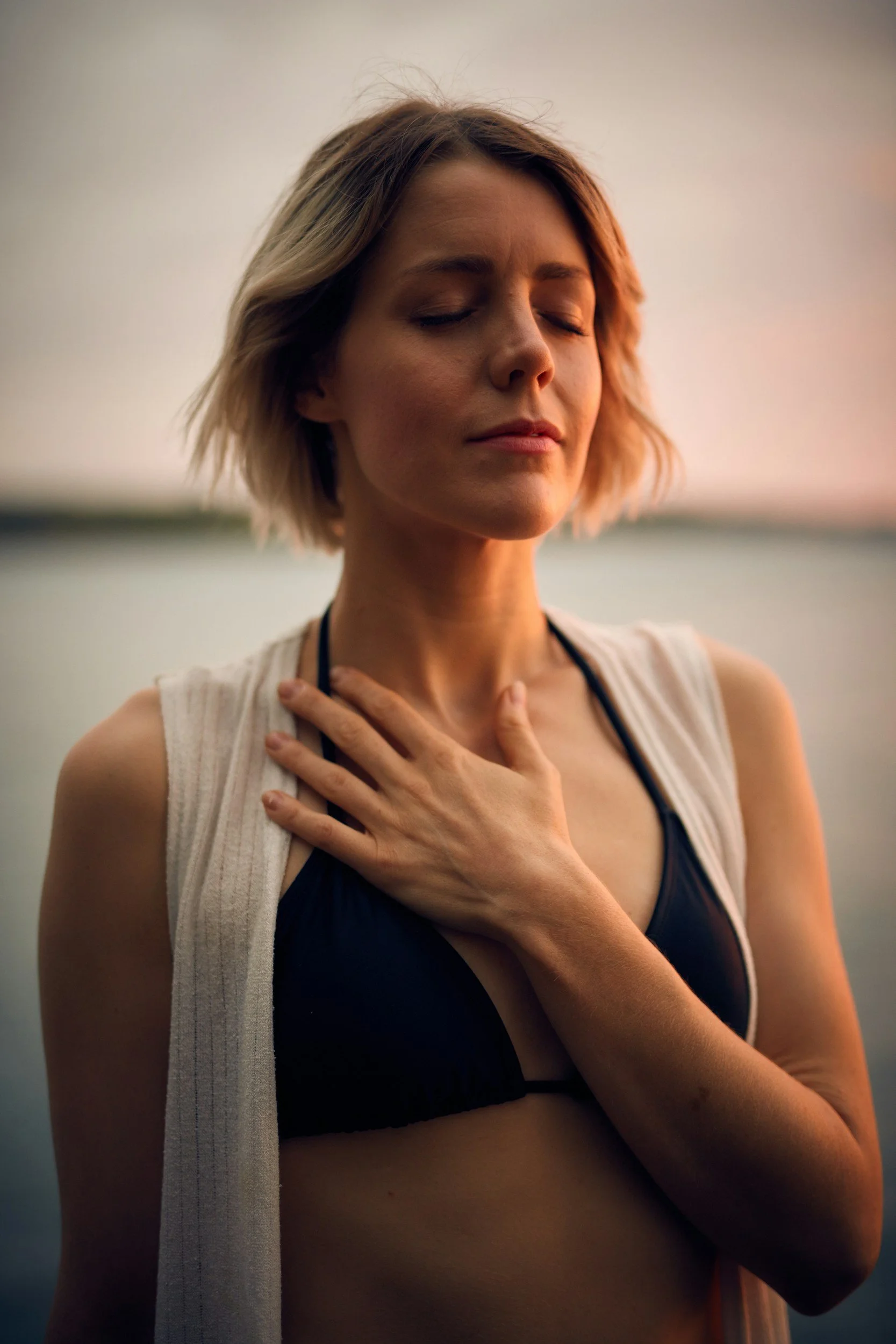
Place one hand on the chest and the other on the belly. Inhale through the nose, directing the breath into the belly; the lower hand should rise while the upper hand stays relatively still. Exhale slowly and completely. The goal is full, slow breaths rather than the quick, shallow pattern anxiety produces.
With consistent practice, diaphragmatic breathing becomes the resting default, gradually lowering the nervous system's baseline activation.
Extended Sigh Exhale
A single extended exhale produces an immediate drop in nervous system arousal. Inhale fully through the nose; exhale completely through the mouth with an audible release. Repeat three to five times.
The audible exhale exaggerates the exhale phase, activating the parasympathetic response more strongly than a quiet exhale. This technique works well at the start of a longer breathwork practice or in moments of sudden frustration or tension.
Alternate Nostril Breathing
Alternate nostril breathing is a regulated technique used to slow the breath rate and reduce nervous system arousal. Close the right nostril with the thumb and inhale through the left; close the left nostril and exhale through the right; inhale through the right; close and exhale through the left. Continue for one to two minutes.
The technique slows breathing and narrows attention to the breath, interrupting anxious thought loops and reducing mental arousal. The pace produced by alternating sides is the functional mechanism.
Building Breathwork Into a Routine
Breathing techniques work best when practiced consistently rather than only during anxiety spikes. A nervous system trained through regular practice responds faster and with less effort than one encountering a technique for the first time mid-panic.
Starting with two to three minutes daily produces results. Pairing breathwork with an existing routine, morning, before sleep, or during a predictable pause in the day, reduces the friction of establishing the habit. The Breathwork Basics program walks through foundational techniques step by step for anyone building a daily breathwork practice.
When Therapy Helps
For anxiety producing frequent panic, disrupting sleep, or affecting daily functioning, the underlying nervous system patterns warrant more structured support than breathwork alone provides.
Anxiety therapy works with the dysregulated nervous system driving chronic activation, the cognitive patterns amplifying the stress response, and the behavioral habits keeping anxiety in place. Breathwork fits naturally within this framework as one of the core regulation tools, alongside structured approaches addressing the nervous system at a deeper level.
I offer online therapy in Idaho, Utah, Colorado, Connecticut, Delaware, South Carolina, and Florida.
FAQ
How does anxiety affect breathing?
Anxiety triggers the fight-or-flight response, which shifts breathing into a faster, shallower pattern centered in the chest. This was adaptive in environments with frequent physical threats; in everyday non-threatening situations, the breathing pattern sends a false danger signal to the nervous system and sustains the stress response. The result is a feedback loop: anxious breathing reinforces the anxiety, which reinforces the breathing pattern.
Does breathwork help anxiety?
Yes. Slow, extended breathing activates the vagus nerve and shifts the autonomic nervous system toward the parasympathetic branch, which governs the rest-and-digest state. This produces measurable reductions in heart rate, muscle tension, and the subjective sense of anxiety. Breathwork works because the nervous system responds to breathing signals directly, not because focusing on breath distracts from anxious thoughts.
What breathing technique works best for anxiety?
Different techniques suit different situations. Box breathing (four counts in, four hold, four out, four hold) works well in acute anxiety and before stressful situations. 4-7-8 breathing (four in, seven hold, eight out) works well for sleep and sustained tension. Diaphragmatic breathing addresses the shallow chest-breathing pattern and builds a calmer resting baseline over time. Starting with one technique and practicing consistently tends to produce more benefit than rotating between several.
How does 4-7-8 breathing work?
4-7-8 breathing works primarily through the extended exhale. Exhalations activate the parasympathetic nervous system more directly than inhalations, and lengthening the exhale relative to the inhale signals safety to the brain. The hold phase between inhale and exhale briefly raises carbon dioxide tolerance, which reduces the sensation of breathlessness. The full pattern slows the overall breathing cycle and lowers the nervous system's activation state.
How long should I practice breathing exercises for anxiety?
Two to three minutes of consistent breathwork produces a noticeable shift in nervous system state. Longer sessions, five to ten minutes, produce stronger effects. The more consistent variable is frequency rather than duration: practicing daily at a low-anxiety baseline builds nervous system flexibility over time and makes the techniques more accessible during high-anxiety moments. Short daily practice tends to outperform occasional longer sessions.
When should I see a therapist for anxiety and breathing problems?
Therapy is worth considering when anxiety is frequent, intense, or disrupting sleep, work, or daily activities; when breathing symptoms like chest tightness or breathlessness appear regularly; or when anxiety is producing panic episodes. Breathwork addresses the physiological layer of anxiety and works best alongside other structured approaches for more persistent patterns. A therapist experienced in anxiety addresses the nervous system dysregulation, cognitive amplifiers, and behavioral cycles maintaining anxiety at their source.
About the Author
Taylor Garff, M.Coun., LCPC, CMHC, LPC, CCATP is a licensed therapist with over 10 years of experience helping adults manage anxiety, overwhelm, and identity challenges. He is licensed in Idaho (LCPC #7150), Utah (CMHC #6004), Colorado (LPC #0018672), Connecticut (LPC #8118), and Florida (TPMC #1034). He is certified in HeartMath, Safe and Sound Protocol (SSP), and breathwork facilitation. Taylor is the founder of Inner Heart Therapy, where he provides online therapy across multiple states.
