Transgender and Nonbinary Anxiety: When Your Body Becomes a Conflict Zone
Your nervous system is not wired to tell you that your gender identity is wrong. Your nervous system is wired to detect threat. And when the world around you treats your identity as threatening, your body responds the only way the knows how: ready to defend.
Transgender and nonbinary anxiety is not the same as generic anxiety. The stressors are different. The recovery patterns are different. And the path to nervous system safety requires more than standard anxiety tools because the threat is structural, not situational.
This post covers what transgender and nonbinary anxiety looks like, how it anchors itself in the body, and what works when standard "breathing exercises" fall short.
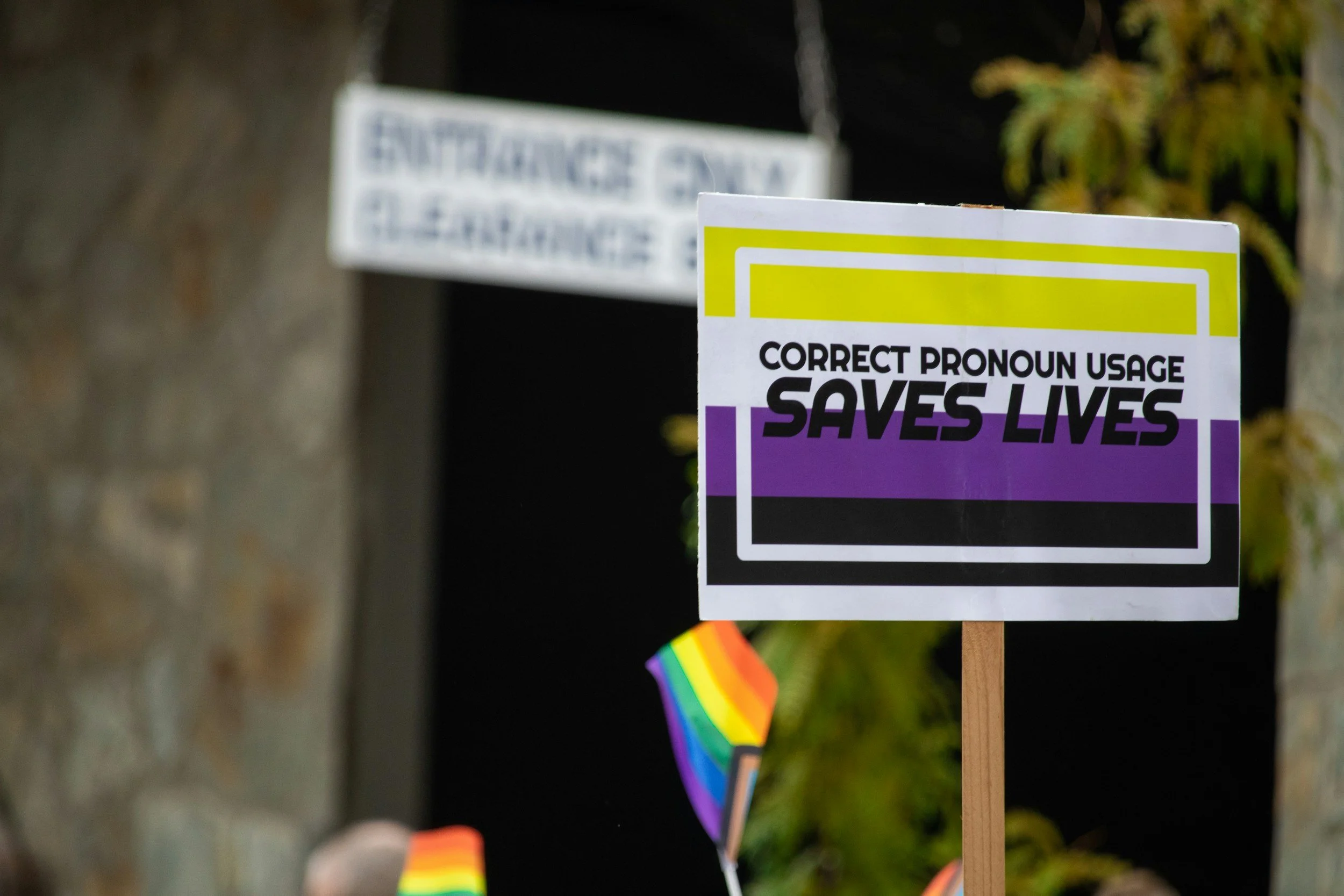
The Anatomy of Transgender and Nonbinary Anxiety
Anxiety for transgender and nonbinary people lives at the intersection of internal and external conflict. Your mind knows who you are. Your body experiences the constant surveillance of a world that might not accept that truth.
This creates a specific kind of nervous system state: you're not anxious about whether you're truly trans or nonbinary. You're anxious about what happens when you move through a space that doesn't affirm that identity.
The distinction matters. Many therapy tools assume the anxiety comes from self-doubt. For many transgender and nonbinary people, the anxiety comes from other people's doubt. From the expectation that you'll be questioned, misgendered, or treated as a spectacle. From the knowledge that some spaces are unsafe.
Misgendering is not a small thing. Each time someone uses the wrong pronoun or name, your nervous system receives a message: this person does not see you. In polyvagal terms, the neural circuit that codes safety has been broken. Your body registers this as a threat to social connection, which triggers a threat response.
When this happens repeatedly across work, family, healthcare, and public spaces, your nervous system does not get to rest. The threat becomes ambient. Background noise. Your body learns to stay vigilant. The nervous system's role in chronic anxiety explains why this cycle is so hard to break.
The Polyvagal Lens: Why Your Nervous System Stays Stuck
The polyvagal theory maps the vagus nerve and explains how your body determines whether an environment is safe or dangerous based on social cues. It's not about whether the threat is "real." It's about whether your nervous system perceives cues of safety.
For transgender and nonbinary people, those cues are inconsistent at best. You might feel safe with affirming friends and then step into a public bathroom or doctor's office and instantly dysregulate. Your nervous system is not broken. The environment is sending conflicting signals.
The body-level anxiety you feel is not a flaw in how you process information. It's your nervous system doing exactly what it's designed to do: it's protecting you from a pattern of invalidation.
This is why anxiety often persists even when you're "doing everything right." Meditation, breathing exercises, and cognitive reframing are tools for shifting anxious thoughts. But they do not change the structural reality: you still exist in a world that might not see you as you are.
Gender Dysphoria and Anxiety: The Overlap
Gender dysphoria and anxiety are separate experiences, but they intensify each other. Dysphoria is the distress you feel when your body or social role does not match your gender identity. Anxiety is your nervous system's fear response.
When you experience dysphoria, your nervous system registers your own body as a threat. You become hyperaware of how your body looks, sounds, and moves in public. You scan for signs that others notice the mismatch. You prepare for judgment or rejection.
This combination has a name in nervous system language: self-directed threat. Your body is not safe from your own mind, and it's not safe from the social world. You're caught between two sources of danger.
The anxious hypervigilance that follows is adaptive in some ways. If you're aware of every glance, every pause, every pronoun choice, you adjust before the threat escalates. You're trying to stay ahead of rejection.
But constant scanning is exhausting. And when there's no actual threat in the moment, hypervigilance creates anxiety that has nowhere to resolve. Your nervous system stays activated because the surveillance never stops.
Misgendering as a Nervous System Threat
Misgendering is not primarily a cognitive problem. It's a nervous system event. Each instance triggers the same protective response in your body: contraction, hypervigilance, or shutdown.
From a polyvagal perspective, misgendering breaks the ventral vagal circuit that codes for social safety. The person across from you is speaking, but the safety cues are absent. Your body does not feel seen or understood. Your nervous system perceives this as a social threat.
When this happens once or twice, your system can recover. But when it's chronic, your nervous system learns to expect misgendering. You arrive at social situations primed for the threat. Your nervous system is already halfway through a defensive response before anyone even speaks.
This is why some transgender and nonbinary people experience anxiety relief not from learning to "accept" misgendering, but from being in spaces where misgendering does not happen. Your nervous system finally receives consistent cues of social safety.
Hypervigilance in Public Spaces
Walking into a public space as a transgender or nonbinary person often means activating a surveillance protocol. You assess the faces around you. You listen for clues in how people react. You adjust your presentation, your pace, or your route depending on what you perceive.
This is hypervigilance. It's a nervous system state where your attention narrows to threat detection. Hypervigilance is adaptive when you live in an environment with real, unpredictable danger. It becomes problematic when it's your baseline.
The exhaustion that comes with chronic hypervigilance is not psychological weakness. It's a physiological cost. Your nervous system is working in overdrive because the signals it's receiving do not consistently say "you are safe here."
Many transgender and nonbinary people report that leaving environments where they experience chronic misgendering reduces anxiety significantly. This is not because they learned to think differently. It's because their nervous system finally received environmental confirmation of safety.
Medical Transition Anxiety
For transgender people considering or pursuing medical transition, anxiety can spike in specific ways. You're making irreversible or long-term decisions about your body in a healthcare system that is not always affirming. You're managing conversations with providers who might not understand your identity. You're working through the physical and emotional changes that come with hormones or surgery.
Each of these creates a specific anxiety signature. Waiting room anxiety (anticipatory worry about provider reaction or competence). Dysphoria that fluctuates with treatment timing. Fear about whether the "right" choice is right. Anxiety about changes to your body and identity, even when those changes are wanted.
Medical transition anxiety is not the same as medical anxiety in general. The stakes feel higher because your body and identity are inseparable. The anxiety is not about the medical procedure. It's about whether you'll still be seen and understood after you change.
Social Transition Stress and Nervous System Activation
Social transition is the process of changing your name, pronouns, presentation, or the way you move through the world to align with your identity. It's not separate from nervous system regulation. It's the process of reshaping how the world mirrors you back to yourself.
Social transition anxiety includes fear about rejection, loss of relationships, workplace complications, and the sheer visibility of being someone who appears to contradict social expectations.
From a nervous system perspective, social transition is asking your body to stay calm while you're actively changing the cues the world uses to relate to you. Your nervous system has to adapt to new voices, new names, new reactions. This takes time and safety.
Many people experience a paradox: after social transition, anxiety decreases because their nervous system receives consistent confirmation of identity. But during and immediately after transition, anxiety often spikes as your nervous system learns new safety patterns.
Affirming Spaces as Nervous System Tools
An affirming space is not a place where people are "nice." It's a place where your nervous system receives consistent cues of social safety. In polyvagal terms, the ventral vagal circuit activates. Your body knows it relax.
Signs that a space is affirming for your nervous system include:
Your name and pronouns are used consistently without you having to correct
You are not the object of curiosity or scrutiny
Your identity is treated as normal and unremarkable
Your body is not a discussion topic
Your autonomy in decisions about your presentation or body is respected
Affirming spaces give your nervous system permission to downregulate. You might notice anxiety decreases when you spend time with affirming people or in affirming communities, not because you've reframed your anxiety, but because your body is finally safe.
This is why many transgender and nonbinary people describe community and connection as the primary thing that shifted their anxiety. Not therapy alone. Not medication alone. But the relief of being seen and accepted.
Finding and Building Trans-Competent Therapeutic Support
Therapy for transgender and nonbinary anxiety should be trauma-informed, identity-affirming, and grounded in nervous system understanding. Many standard anxiety therapies were designed for people experiencing situational stress, not chronic minority stress and dysphoria.
What to look for in a therapist:
They have specific training or experience in transgender and nonbinary mental health
They understand polyvagal theory and somatic (body-based) approaches
They do not pathologize your gender identity or require you to prove your identity
They do not assume your anxiety is rooted in self-doubt about your identity
They differentiate between gender dysphoria and anxiety and treat both
They are connected to or understand the trans community
Therapy for transgender and nonbinary anxiety often works best when it includes both top-down (cognitive, talking) and bottom-up (nervous system, somatic) tools. Your nervous system needs to be regulated before your mind can fully engage in processing.
Body-Based Regulation for Trans and Nonbinary Anxiety
Standard breathing exercises sometimes fall flat for transgender and nonbinary people with anxiety because they do not address the underlying reality: the threat is not in your thoughts. It's in your body's relationship to visibility and safety.
Body-based regulation tools that tend to work better:
Grounding in affirming spaces: Notice when your nervous system is calm. What are you near? Who are you with? What cues is your body receiving? Anchor your nervous system to places and people that provide consistent affirming cues.
Somatic tracking without judgment: Check in with your body throughout the day without trying to change anything. Notice where you carry tension related to dysphoria or misgendering. Notice what happens when you move into an affirming space. This awareness helps your nervous system distinguish between real danger and learned threat responses.
Co-regulation with affirming people: Your nervous system learns safety through connection with people who see and affirm you. Time with affirming friends or partners is not self-indulgence. It's nervous system medicine.
Movement that feels affirming: Some transgender and nonbinary people find moving their body in ways that affirm their identity reduces anxiety. This might be presentation-related, gender-affirming exercise, or any movement that makes your body feel more like home.
Boundary-setting as nervous system practice: Setting boundaries with people who misgender you, creating distance from invalidating environments, and protecting your time and energy are not selfish. They are essential nervous system regulation.
Addressing Persistent Anxiety After Coming Out or Transition
For some people, anxiety does not decrease after coming out or beginning transition. This feels confusing when you've been told acceptance will fix everything. The relief many people experience is real, but for others, the anxiety lingers or even intensifies.
This might happen because:
Visibility in an unsupportive environment creates new anxiety
The absence of dysphoria reveals anxiety patterns that were always there
Your nervous system takes time to learn safety is real
You're still facing structural barriers and discrimination
Coming out surfaced deeper shame or grief that needs processing
None of these mean you made the wrong choice. They mean coming out and transition are not anxiety cures. They are recalibrations. Your nervous system might need specific support to learn the risks you were protecting against are not materializing.
Building Safety While Still Being Visible
Complete safety is not possible in a world that still discriminates. The goal is not perfect safety. The goal is enough safety that your nervous system can rest.
This means:
Finding or building community with other transgender and nonbinary people who understand the specific stressors you face
Creating spaces where you are affirmed and seen
Setting boundaries that protect your energy
Seeking healthcare from providers who understand your identity
Processing the grief and anger that come with structural invalidation, not managing your anxiety about it
Accepting that some spaces will be uncomfortable and planning accordingly
Safety is not something you earn by being a "better" version of yourself or by managing your anxiety more skillfully. Safety is built through connection, community, and accessing spaces and people who affirm your identity without question. Managing LGBTQ+ mental health in a hostile climate covers this in more depth.
If you're looking for a therapist who understands transgender and nonbinary anxiety, Inner Heart Therapy offers LGBTQ-affirming online therapy across Idaho, Utah, Colorado, Connecticut, Delaware, South Carolina, and Florida. If you want something to work with today, the free Nervous System Reset guide walks through tools for bringing your nervous system out of threat mode.
FAQ
Is transgender or nonbinary anxiety the same as gender dysphoria?
No. Gender dysphoria is distress about a mismatch between your identity and your body or social role. Anxiety is a nervous system response to perceived threat. You experience anxiety without dysphoria, dysphoria without anxiety, or both simultaneously. They feed each other but are separate experiences that might need different approaches.
Why does my anxiety get worse after coming out if I feel more authentic?
Authenticity and anxiety are not the same thing. Coming out often increases visibility, which triggers more social threat responses in the short term. Your nervous system might need time to learn being seen is safe. Additionally, dysphoria might decrease while anxiety about how others will respond increases. Therapy helps distinguish between these patterns and address them separately.
Can therapy help if I still experience discrimination?
Yes, but not by teaching you to accept discrimination or change how you think about it. Nervous system-based therapy helps your body learn to distinguish between actual danger in the moment and learned threat patterns from past experiences. It also provides tools for regulation in unsupportive environments and helps you build and access affirming spaces where your nervous system can recover. Therapy cannot change structural discrimination, but it change how your nervous system responds to it.
How do I find a trans-competent therapist in Idaho, Utah, Colorado, Connecticut, Delaware, South Carolina, or Florida?
Look for LGBTQ-affirming therapists who list transgender and nonbinary experience in their profiles and have training in trauma-informed, somatic, or nervous system-based approaches. Many therapists in those states are now offering telehealth, which expands access. LGBTQ-specific mental health organizations in your state also provide referrals. During your first contact, ask directly about their experience with transgender clients and their approach to anxiety that's rooted in minority stress rather than self-doubt.
What if affirming spaces are not accessible to me where I live?
Start small and build. Even one affirming relationship or one hour per week in an affirming space can provide your nervous system with safety anchors. Online communities, virtual therapy, and telehealth services can extend your access to affirming connection. The goal is enough regular contact with affirming people that your nervous system learns safety is possible, not that every moment of every day is affirming.
Is medication helpful for transgender and nonbinary anxiety?
Medication is one tool, especially if anxiety is severe or if you're dealing with both anxiety and dysphoria. Work with a provider who understands both transgender health and psychiatric medication. Some people find medication alone is enough. Others need medication plus therapy plus nervous system tools plus community. There's no standard answer; it depends on your nervous system, your circumstances, and your preferences.
How long does it take for anxiety to decrease after coming out or starting transition?
There's no timeline. Some people experience immediate relief. Others notice gradual improvement over months or years. Some people find specific aspects improve while others take longer to shift. Your nervous system needs consistent cues of safety to update its threat detection system. That takes time and repetition. Patience with yourself is not giving up. It's realistic nervous system biology.
About the Author
Taylor Garff, M.Coun, LCPC, CMHC, LPC, CCATP is a licensed therapist with over 10 years of experience helping adults manage anxiety, overwhelm, and identity challenges. He is certified in HeartMath, Safe and Sound Protocol (SSP), and breathwork facilitation. Taylor is the founder of Inner Heart Therapy, where he provides online therapy across multiple states.
