Online Anxiety Therapy for Adults in the Fort Lauderdale Area
Welcome
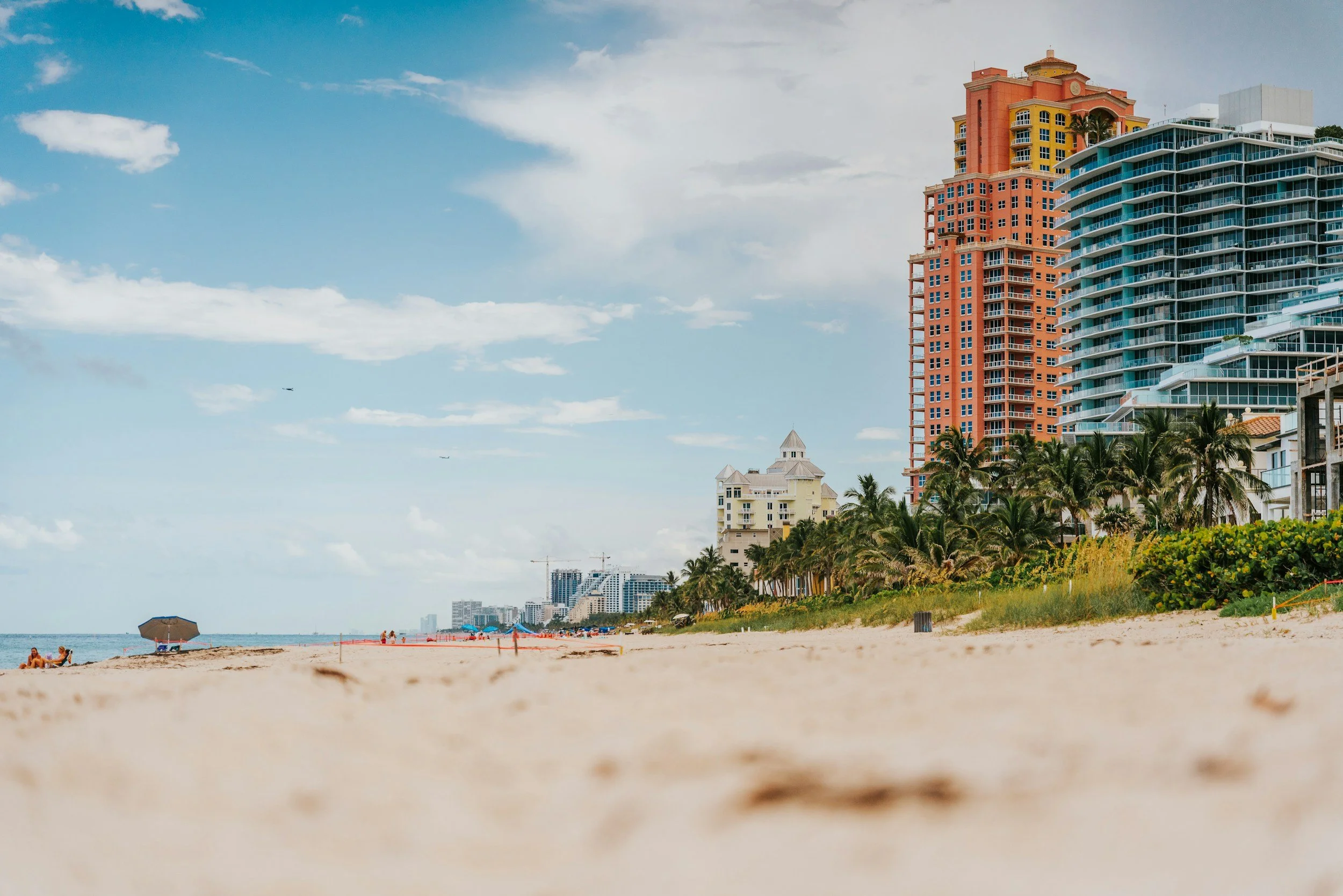
Fort Lauderdale runs on seasons most residents never signed up for: a tourism calendar with sharp highs and lows, a hurricane season stretching half the year, and a cost of living climbing faster than most paychecks. I offer telehealth anxiety therapy across the region, connecting adults in Fort Lauderdale, Pompano Beach, and neighboring cities through secure video sessions. More on the Florida service area lives on the Florida locations page. I hold a Florida license, TPMC #1034, and provide therapy online only to adults across the whole state, including the Fort Lauderdale area.
You will receive a response in two business days.
Telehealth Anxiety Therapy for Fort Lauderdale Area Adults
Sessions run 50 minutes over secure video, wherever you sit in Broward County. No drive on I-95 during rush hour, no parking search near Las Olas, no waiting room. Telehealth removes the commute hospitality shifts, restaurant schedules, and hotel rotations rarely leave room for, since much of the local workforce clocks in outside a standard nine-to-five. A meta-analysis of randomized trials on telehealth therapy for anxiety found outcomes tracking closely with in-person care[1]. Whether you live near the beach in Fort Lauderdale or inland toward Sunrise, the format stays simple: one login, one 50-minute session, and nowhere in Broward County you need to park.
What Brings Fort Lauderdale Area Adults to Therapy
South Florida's economy runs on tourism and hospitality, and both rise and fall with the calendar. Income swings hard between peak season and the slow months, and the swings themselves become a source of dread long before the slow season starts. Add a housing market where rent has outpaced wages for years running, and the financial floor many residents stand on feels thin. Nationally, an estimated 19.1% of adults experience an anxiety disorder in a given year, per NIMH data, and tourism income swings add a layer specific to this coastline[2]. Broward County also carries a federally designated Mental Health HPSA for the low-income population, covering 575,510 people, plus three separate facility-level HPSA designations, a shortage I hear echoed by clients who tried finding in-person care before switching to telehealth, according to HRSA's HPSA Dashboard[3].
A pattern I notice with clients working in hospitality and tourism here: the nervous system learns to brace for the next surge months before the surge arrives, and rest during the slow season never fully lands, since the body stays on alert for what comes next.
Most anxiety advice assumes a predictable week and a body allowed to power down after work.
Hospitality and tourism workers here rarely get either.
Shift schedules shift with demand, hurricane season adds a layer of low-grade vigilance from June through November, and leaving work stress at work falls apart when your income depends on staying alert to guests, weather, and last-minute schedule changes.
Rent increases outpacing income, insurance premiums climbing after each storm season, and a service economy where tips make up a real share of monthly income add pressure most households carry quietly. My post on managing anxiety during economic uncertainty speaks directly to the feeling of never quite knowing what next month's income looks like.
A Different Way to Work With Anxiety
Here is a composite picture, not a specific client: someone working front-of-house at a beachfront hotel, praised at work for staying calm under any complaint, coming home each night unable to power down, sleep thin, jaw tight, replaying the day on a loop. The calm at work and the static at home connect. They are not separate problems.
I think about the nervous system less as a machine to fix and more as a part of you to get familiar with. Years of training in the Safe and Sound Protocol™ and HeartMath taught me the body holds information long before words catch up. Anxiety here often shows up as a body braced for the next wave, whether the wave is a hurricane forecast, a slow season, or a guest complaint. Getting to know what your body does under pressure, rather than pushing the feeling away, tends to open more room to breathe.
If your body runs keyed up long after the guests leave or the storm passes, breath work built for a nervous system stuck in high gear walks through techniques worth trying between sessions.
Working together often starts with naming where anxiety comes from, moves into nervous system regulation work suited to a body running on adrenaline for months, layers in cognitive tools for spiraling thoughts about money or weather, and builds toward habits sustainable on a hospitality schedule, not a nine-to-five.
Cities I Serve in the Fort Lauderdale Area
I work with adults across the Fort Lauderdale area, including Fort Lauderdale, Hollywood, Oakland Park, Pompano Beach, Sunrise, and Wilton Manors. Every city connects through the same telehealth setup, so your location narrows down to one requirement: sitting physically inside Florida during your session.
Practical Details
Insurance billing runs through Alma and Headway, with in-network coverage including Aetna, Cigna, Anthem, and United Healthcare, along with several other plans; coverage gets confirmed before your first session, and superbills are available if your plan sits out of network.
A free 15-minute consultation comes first, a short conversation to talk through what brings you to therapy and whether working together fits.
I offer online therapy in Idaho, Utah, Colorado, Connecticut, Delaware, South Carolina, and Florida.
Schedule a free consultation to get started, low pressure, no obligation.

Meet The Therapist
I am Taylor Garff, LCPC, LPC, CMHC, a licensed therapist offering online anxiety therapy for adults throughout Florida. My work combines evidence-based approaches with nervous-system awareness so therapy feels practical and supportive.
I specialize in helping high-functioning adults who appear calm on the outside but feel overwhelmed on the inside. Therapy gives you a place to slow down and reconnect with your body’s natural rhythm.
FAQ
What does online anxiety therapy in the Fort Lauderdale area look like week to week?
Sessions run 50 minutes over secure video, usually weekly at the start and spacing out as things settle. Early sessions focus on understanding your history and current stressors, later sessions move toward regulation skills and practical tools for the week ahead. Nothing about the format changes whether you live in Fort Lauderdale, Hollywood, or Pompano Beach.
Do I need to live in Fort Lauderdale to work with you?
No. Florida telehealth rules require you to sit physically inside the state during each session, so anywhere from Wilton Manors to Sunrise to Pompano Beach works, along with any other Florida city. A private, quiet space and stable internet connection cover the rest of what a session needs.
How does hurricane season affect scheduling?
Storms happen, and sessions reschedule around them without penalty. Many clients find the weeks before and during hurricane season the hardest stretch of the year for anxiety, so keeping a standing appointment through storm season, adjusted as weather requires, tends to help more than pausing therapy altogether.
What does online anxiety therapy cost in the Fort Lauderdale area?
Session cost depends on your insurance plan and network status. Insurance billing runs through Alma and Headway, with in-network coverage including Aetna, Cigna, Anthem, and United Healthcare, along with several other plans; coverage gets confirmed before your first session, and superbills cover out-of-network reimbursement for plans outside those networks. Reach out with your specific plan details ahead of time for a clear answer.
My anxiety seems tied to tourist season. Is this worth bringing to therapy?
Seasonal spikes in anxiety are common in a region running on a hospitality economy, and naming the pattern out loud often loosens the grip the pattern holds over you. Therapy gives you a place to track the pattern across a full year, past the slow months alone, building tools ahead of the next surge instead of scrambling once the surge starts.
Where do LGBTQ+ people get psychological help?
Wilton Manors, part of this hub, holds one of the highest LGBTQ population densities in the country, and living near an affirming community does not always mean finding a therapist who feels affirming in the room. My practice specializes in LGBTQ-affirming therapy, so sessions start from a place of understanding your identity rather than needing background explained first. Online therapy extends the same affirming care to LGBTQ+ adults anywhere in Florida, not only near Wilton Manors.


Sources
PubMed, National Library of Medicine. Telehealth Versus In-Person Mental Health Care. https://pubmed.ncbi.nlm.nih.gov/37277113/
National Institute of Mental Health. Any Anxiety Disorder. https://www.nimh.nih.gov/health/statistics/any-anxiety-disorder
Health Resources and Services Administration (HRSA). Mental Health Care Health Professional Shortage Area Find, Broward County, Florida, data as of 07/21/2026. https://data.hrsa.gov/tools/shortage-area/hpsa-find

Regulating Your Nervous System with SSP
At Inner Heart Therapy, I offer the Safe and Sound Protocol (SSP)—a research-backed therapy that helps regulate your nervous system. If you’re struggling with anxiety, trauma, or sensory overload, SSP can support your body’s natural ability to feel safe, calm, and connected.
Want to learn more? Explore how SSP for Anxiety: How Safe Sound Therapy Helps Your Brain Relax and SSP vs. Traditional Therapy: Why Your Nervous System Needs More Than Talk can deepen your healing journey.
Stay Connected, No Therapy Required
Not ready to dive into sessions? You can still get small doses of calm.
I share quick tools, reflections, and real-world ways to ease anxiety, straight to your inbox.




Last reviewed by Taylor Garff, LPC, LCPC, CMHC on 10/2025