Why "Take a Deep Breath" Doesn't Help Anxiety
Someone says "take a deep breath" during an anxious moment. Your chest tightens more. Your heart rate picks up. You feel worse.
This is not a failure of willpower or breathing skill. It is a predictable physiological response that most breath advice ignores.
Here is what happens in your body when you follow that instruction, and what a more useful signal looks like.
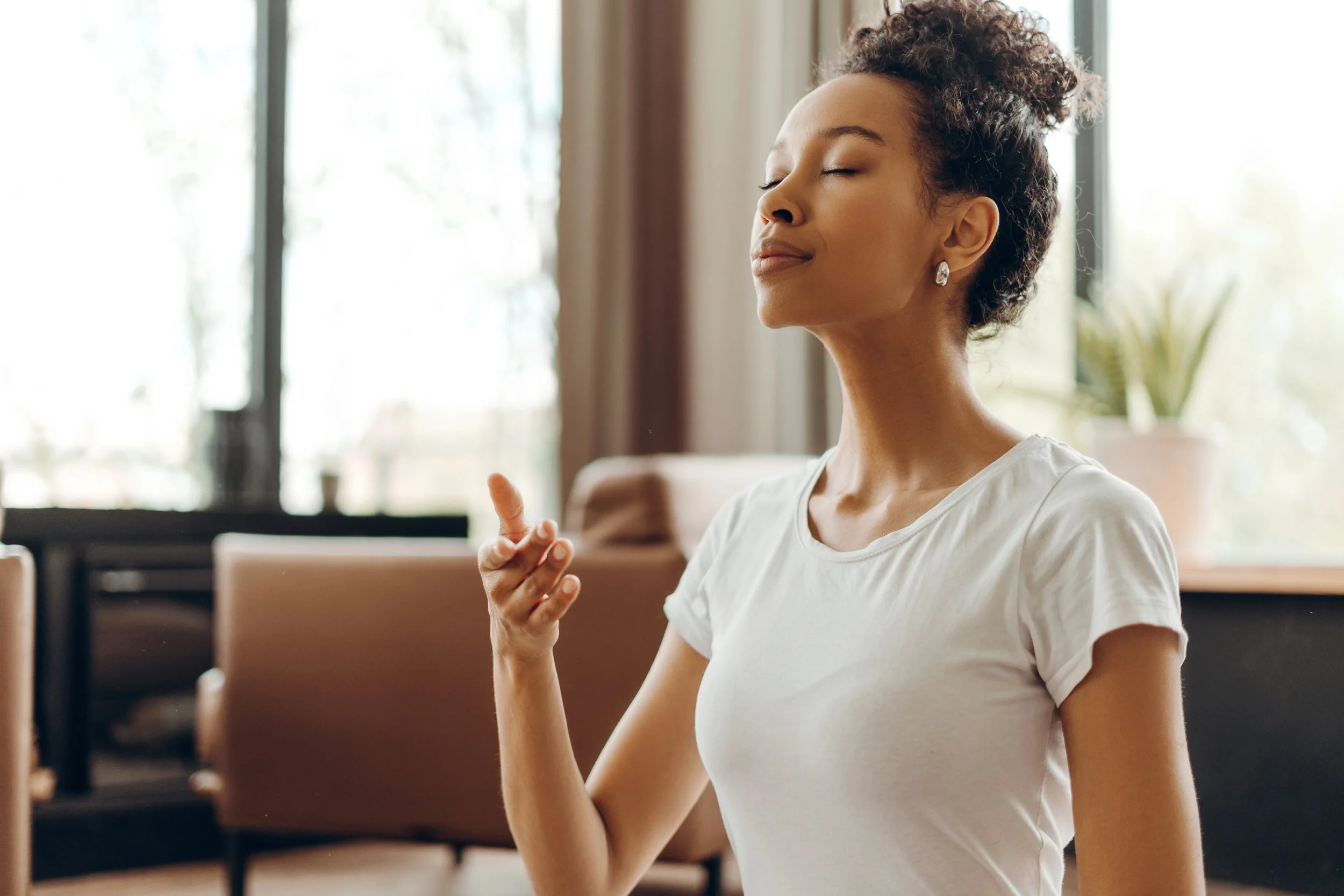
The problem with a deep breath
A strong inhale does not calm your nervous system. A strong inhale raises it.
When you take a big breath in, your heart rate rises slightly and your nervous system moves toward readiness. For a system already prepared for threat, that is one more layer of activation on top of existing activation.
This is why the standard instruction backfires for anxious adults. "Take a deep breath" assumes a neutral or under-activated baseline. An anxious nervous system is neither.
What a deep breath signals to your body
Breathing in deeply signals the body to prepare. The diaphragm moves, the lungs expand, and the nervous system reads the cue as "get ready." In someone whose system is not already in alarm, a big inhale followed by a long exhale works because the exhale brings the system back down.
In someone already activated, the inhale pushes the readiness signal higher before the exhale brings it down. The gap between those two states: up, then down: tends to feel more disorienting than helpful.
For many anxious adults, skipping the big inhale entirely and starting with the exhale produces a faster and calmer response.
Why the exhale is where relief lives
A slow, soft exhale activates the part of your nervous system associated with calm recovery. Heart rate drops slightly. Muscle tone softens. The body reads a long exhale as "the moment passed."
This is not a minor distinction. Exhale-led breath practices change the sequence: you do not have to spike before you settle.
What this looks like in practice: let whatever breath comes in happen naturally, without controlling or expanding it. Then release a slow, soft breath out through your mouth. Pause for a second. Repeat once.
No technique. No timing. No yoga mat.
The cultural baggage of "breathe"
The phrase carries weight beyond physiology.
For many people, "take a breath" or "calm down" appeared during moments of distress as a way to manage or suppress a reaction. The instruction did not land as support. It landed as pressure. The message was: what you're feeling right now is inconvenient, so stop.
When breathwork instructions echo that framing: "breathe deeply," "calm your nervous system," "let it go": a portion of the nervous system recognizes the shape of the demand. The result is not calm. The result is a protective response layered on top of the anxiety already present.
Tone and framing in breathwork matter. An invitation feels different from a correction.
What to try instead
Skip the deep inhale. Try one of these:
Release a long, soft exhale through your mouth without controlling the inhale first. Let the next inhale be whatever size comes naturally.
Try the uneven breath: a count of three in, a count of five out. The ratio matters more than the size.
Put your attention on something outside your body, name three things you see, then let one quiet exhale follow the naming.
Press your hand on a firm surface and exhale slowly while noticing the pressure under your palm.
None of these require stillness, counting, or skill. One repetition is a complete practice.
How this fits into anxiety therapy
In sessions, breathwork is an option, not a requirement. If the phrase "take a deep breath" has a charged history for you: from childhood, relationships, or past attempts at anxiety management: that is worth bringing into the room.
Therapy offers a space to understand what your nervous system responds to, and to build a toolkit that includes tools fitting your body, your history, and your current capacity.
If you're looking for anxiety support that adapts to how you work, anxiety therapy at Inner Heart Therapy offers telehealth sessions in Idaho, Utah, Colorado, Connecticut, Delaware, South Carolina, and Florida.
Want breath techniques built for anxious nervous systems instead of yoga studios? Breathwork Basics is a $5 toolkit with 14 techniques, 4 follow-along videos, and a workbook.
FAQ
Why does "take a deep breath" make anxiety worse?
A strong inhale raises nervous system readiness before the exhale settles it. For someone already in an anxious state, this creates a spike before the settling, which often feels more disorienting than helpful. The exhale is where the calming signal lives, not the inhale.
What should I do instead of taking a deep breath?
Start with the exhale. Let a natural inhale happen without forcing its size, then release a slow, soft breath out through your mouth. One repetition counts. Focusing on exhale length rather than inhale depth works better for most anxious nervous systems.
Is deep breathing bad for anxiety?
Not for everyone. For people whose nervous systems run at baseline or lower activation, a full inhale followed by a long exhale works well. For anxious adults with an already elevated baseline, leading with the inhale raises activation higher before the exhale settles it. Starting with the exhale skips the spike.
Why does breathing advice feel condescending during anxiety?
The phrase "take a breath" often carries a history for anxious adults: moments when the instruction meant "stop feeling what you're feeling." If that is part of your history, your body's resistance to the cue makes sense. Therapy offers space to untangle what your nervous system learned about regulated breathing.
How does the exhale calm the nervous system?
The exhale activates the branch of the nervous system associated with calm and recovery, slowing heart rate and reducing muscle tension. A slow exhale sends the body a signal that the moment of threat has passed. The inhale does the opposite: it prepares the body for action.
Does counting breaths help anxiety?
For some nervous systems, counting smooths the breath rhythm, which is what sends the calming signal. For others, counting adds a performance layer that raises pressure and distress. Try exhale-only counting if counting feels useful but standard counting raises your anxiety.
Is "take a deep breath" ever good advice?
For nervous systems running at baseline or in mild stress, a full inhale followed by a long exhale works. The problem is that the advice gets applied universally, including to anxious adults in a spike, where it routinely backfires. Context and nervous system state matter.
About the Author
Taylor Garff, M.Coun, LCPC, CMHC, LPC, CCATP is a licensed therapist with over 10 years of experience helping adults manage anxiety, overwhelm, and identity challenges. He is certified in HeartMath, Safe and Sound Protocol (SSP), and breathwork facilitation. Taylor is the founder of Inner Heart Therapy, where he provides online therapy across multiple states.
