When Breathwork Makes Anxiety Feel Worse
You tried breathing exercises. Your chest got tighter. Your heart rate spiked. You felt more activated, not less.
Everyone says "breathe," but for some nervous systems, breathing exercises make things worse. This happens more often than people realize. And the reason is not personal failure. What to do when anxiety spikes plays into this as well.
Breathwork gets recommended for anxiety constantly. For some nervous systems, though, especially those running on chronic high alert, certain breathing practices raise distress rather than lower it. This post explains why that happens and what to do about it.
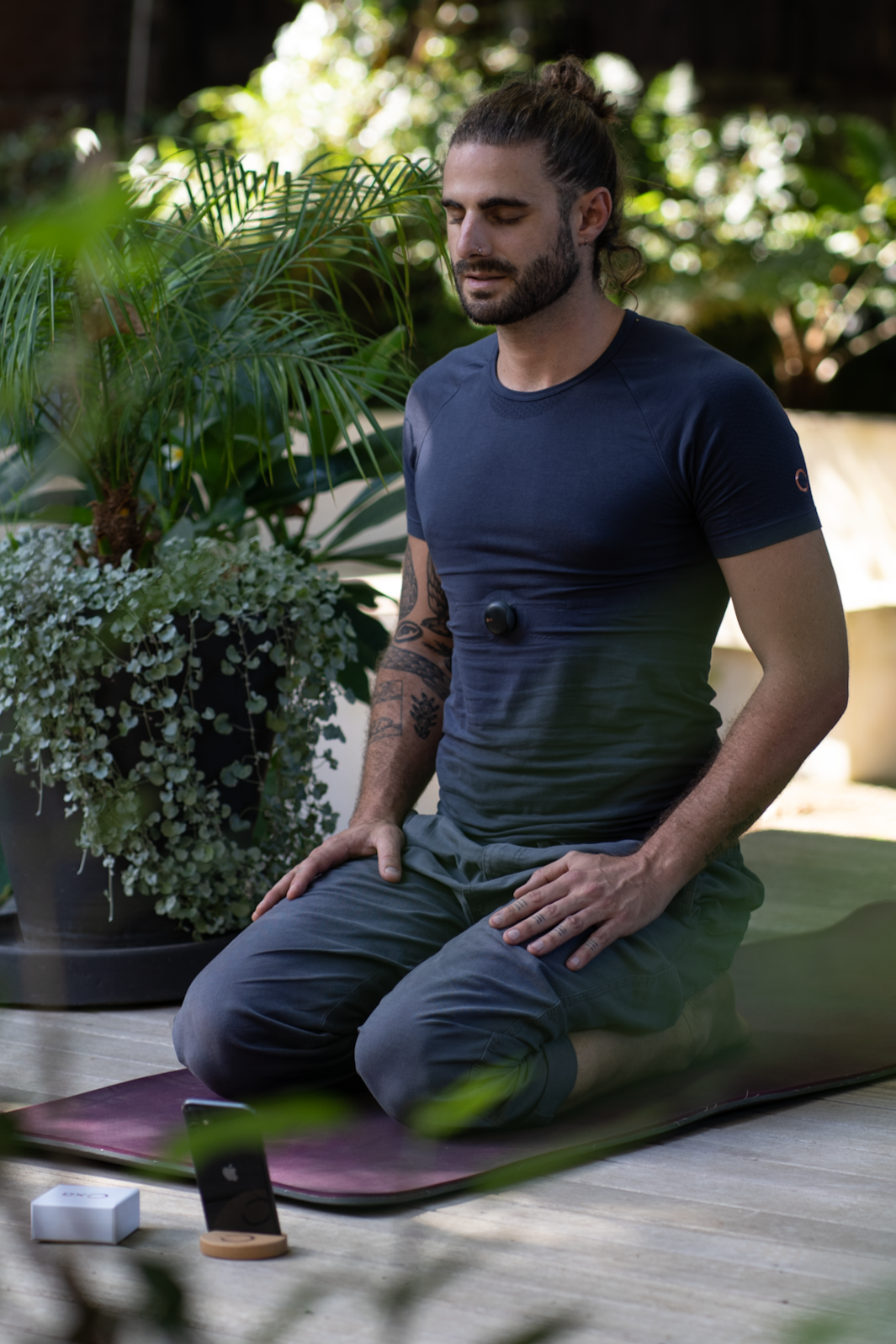
Why breathwork makes anxiety worse for some people
Breathing exercises are not one-size-fits-all. The nervous system processes breath signals based on your history, your current stress load, and how your body learned to stay safe. For many anxious people, the most common breathwork instructions do the opposite of what they're supposed to do.
A strong inhale raises your alertness level
Big, deep inhales are frequently taught as the first step in breathing exercises. But a strong inhale pulls your nervous system toward readiness and activation, not ease. For someone whose baseline is already elevated, adding a strong inhale raises the signal further.
Your body reads the inhale as "prepare." When you're anxious, that message lands on a system that's already prepared.
Tracking breath sensations amplifies discomfort
Breathwork often asks you to pay attention to your chest, your ribs, your throat. For an anxious nervous system, that kind of inward focus amplifies what's already uncomfortable.
You notice the tightness. The slight irregularity. The pressure. What was background noise becomes the main event. For some people, this triggers a fear response on its own.
Past experiences shape how your body responds
Phrases like "calm down" and "take a breath" often appeared during moments of control, pressure, or emotional pain. When breathwork instructions echo those phrases, the body does not always hear "calm." Sometimes it hears "threat."
This is not weakness. It is the nervous system doing its job based on what it learned.
Stillness feels threatening to an anxious system
Many breathwork scripts require stillness. But a nervous system that associates movement with safety, whether through habit, neurodivergence, or chronic stress, experiences enforced stillness as an added demand. The stillness itself becomes a source of tension.
Long routines overwhelm a system with limited capacity
A 10-minute guided breathwork session assumes a certain amount of available capacity. An anxious system with low capacity on a hard day has nowhere to put 10 minutes of breath focus. The routine becomes one more thing to fail at, and the attempt ends with more activation, not less.
How to stop a breathwork practice when distress rises
If you start a breathing exercise and your anxiety increases, stopping is the right move. Here's how to exit without adding to the spiral.
Let your breath return to its natural rhythm without trying to control it.
Shift your attention to something outside your body. Look at an object in the room. Name its color, shape, or texture.
Press one hand gently onto a surface, a table, a wall, your own thigh. Notice the pressure and temperature.
Move slowly. Roll your shoulders, shift your weight, or walk a few steps.
Give yourself a moment before deciding whether to try something else.
Stopping is not giving up. Stopping is information.
When to put breathwork on pause entirely
Some signals suggest breathwork is not the right tool for a season, not because it never works, but because your system needs something else first.
Signs to take a break:
Breathwork consistently raises your anxiety, even with gentle techniques
The thought of doing breathwork itself creates dread
You experience dissociation, dizziness, or panic during attempts
Breath tracking makes physical sensations feel more alarming
You feel shame or failure after sessions
During a breathwork pause, other tools serve the nervous system well: grounding through touch and temperature, slow walking, gentle movement, humming, or time in a regulated environment with a calm person. These approaches work on the same system without asking the breath to lead.
A way to try again later, when your body is ready
Breathwork does not have to be all or nothing. When you return to it, smaller entry points tend to work better.
One option: try a single, quiet sigh. No counting, no timing, no technique. Release air slowly through an open mouth and notice what happens. If your shoulders drop slightly or your jaw softens, that is your system responding. That counts.
Other low-pressure starting points include:
Pairing a soft exhale with an everyday action (standing up from a chair, opening a door)
Keeping eyes open and focused outward rather than tracking inner sensations
Using an external anchor, like holding a warm mug, so attention stays partly outside the body
Stopping after one or two breaths rather than completing a full routine
You decide what feels tolerable. The goal is not a perfect breathwork practice. The goal is a small, safe signal to the nervous system.
How this connects to anxiety therapy
Breathwork is one tool among many. In therapy, the approach depends on what your nervous system responds to, what your history looks like, and what feels manageable in a given week.
Some people never use breathwork in sessions and make meaningful progress. Others explore breath as one piece alongside grounding, pacing, and relationship-based regulation.
If you're interested in working through anxiety with support that adapts to how your body responds, anxiety therapy at Inner Heart Therapy offers telehealth sessions in Idaho, Utah, Colorado, Connecticut, Delaware, South Carolina, and Florida.
Want a place to start with breathwork that's built for anxious nervous systems? Breathwork Basics is a $5 toolkit with 14 techniques, 4 follow-along videos, and a workbook. No yoga mat, no spiritual framing.
FAQ
Why does breathwork make my anxiety worse?
Several factors explain this. Strong inhales raise alertness rather than lower the activation level. Focusing on breath sensations amplifies discomfort. And for people with a history of anxiety, certain breath cues trigger protective responses. If breathwork consistently raises your anxiety, your nervous system is communicating something worth listening to.
Is this normal to feel more anxious after a breathing exercise?
Yes, and the experience is common enough to have a name: paradoxical breathwork response. Your nervous system is not broken. Certain techniques, especially those emphasizing big inhales, breath holds, or extended inward focus, raise activation for some anxious brains rather than lower the activation level.
What should I do if breathing exercises make me panic?
Stop the technique and let your breath return to its natural rhythm. Shift your attention outward; look at objects in the room or press your hand on a surface. Move gently. Give your system a minute before evaluating. Panic during breathwork is a signal to stop, not push through.
Are there breathing exercises that don't make anxiety worse?
Some approaches tend to feel more manageable for anxious nervous systems. A single slow exhale without counting. Pairing breath with an everyday action rather than a dedicated practice. Keeping eyes open and attention outward. Shorter exposure works better than long sessions for most people who find standard breathwork activating.
What is the best breathing technique for anxiety?
There is no single best technique. The most effective approach depends on your nervous system state in the moment. For people who find standard deep breathing activating, a slow exhale through an open mouth (a physiological sigh) tends to be the gentlest starting point. The exhale does more calming work than the inhale. One or two breaths with a long, unforced exhale will often settle the system without the intensity of a full breathing routine.
Should I avoid breathwork if I have anxiety?
Not necessarily. Breathwork is worth skipping when the practice consistently raises distress, triggers dissociation, or creates dread. For some people, a short pause and a different entry point work better than abandoning the practice entirely. A therapist familiar with nervous system regulation helps you figure out what belongs in your toolkit.
How long should I wait before trying breathwork again after a bad experience?
There is no set timeline. The more useful question is whether you feel genuine curiosity rather than dread when thinking about trying again. Starting with one exhale rather than a full session often reduces the pressure enough to make a safe experiment possible.
About the Author
Taylor Garff, M.Coun, LCPC, CMHC, LPC, CCATP is a licensed therapist with over 10 years of experience helping adults manage anxiety, overwhelm, and identity challenges. He is certified in HeartMath, Safe and Sound Protocol (SSP), and breathwork facilitation. Taylor is the founder of Inner Heart Therapy, where he provides online therapy across multiple states.
